Source Rubber Extrusion Parts for Medical, Vehicle, and Industrial Uses
Compare 30 verified rubber extrusion parts from Chinese manufacturers. Buyers can evaluate materials like EPDM and silicone, custom shapes, and certifications for medical, vehicle, and industrial applications. Explore options for sealing, fixture, and anti-static functions with various temperature ranges and packing methods available.
Key considerations
Products List




Comprehensive Sourcing Guide
Rubber Extrusion Parts Sourcing Guide
Buyers must first distinguish between the diverse material profiles available in the current market, as the supply base offers both EPDM and Silicone Rubber options for different operational needs. EPDM is frequently observed for general industrial and automotive sealing, while Silicone Rubber is often selected for applications requiring higher temperature resistance or specific medical compliance. Understanding these material distinctions is the primary step in defining the correct product scope before engaging with potential suppliers.
The observed product listings reveal a wide spectrum of customization capabilities, ranging from standard models to fully bespoke engineering solutions based on customer drawings. Suppliers indicate that dimensions, colors, and cross-section shapes are often tailored to specific client requests, with some vendors offering non-standard sizes and specialized packing methods. This flexibility suggests that buyers should clearly define their geometric and functional requirements early to ensure the selected extrusion profile meets the precise constraints of their assembly line or end-product design.
Product Scope and Observed Listing Signals
The functional scope of these extruded components spans critical sectors including medical, household, electronic, and vehicle manufacturing, where sealing and fixture effects are paramount. Listings highlight applications for doors, windows, machinery, and industrial components, indicating that the parts serve as essential barriers against environmental factors or mechanical wear. Buyers should verify that the specific application environment, such as exposure to UV light or oil, aligns with the material properties advertised by the supplier.
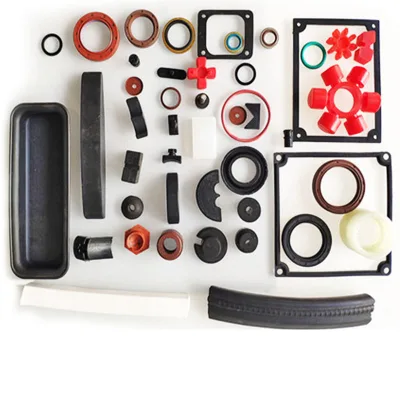
Observations of product attributes show that color options are highly customizable, with suppliers offering standard black alongside a range of Pantone-matched hues for branding or identification purposes. The physical forms vary from hollow sealing strips to solid profiles, with cross-sections often described as rectangle rings or other custom geometries. Procurement teams must confirm that the selected shape and color availability match the aesthetic and functional requirements of the final assembly without incurring unnecessary tooling costs.
Technical Specifications to Verify
Temperature resistance is a critical technical parameter that varies significantly across the observed product range, with some materials rated for extreme conditions from -40°C up to 360°C, while others are specified for a narrower -40°C to 120°C range. Buyers must explicitly request the thermal performance data for their specific use case to ensure the extrusion will not degrade or lose elasticity under operational heat loads. Relying on general descriptions without verifying the specific thermal limits can lead to premature failure in high-temperature environments.
Dimensional accuracy and cross-section consistency are equally vital, as suppliers offer sizes ranging from small components to profiles under 1000mm, often produced via continuous vulcanization processes. The standardization of these parts varies, with some listings adhering to specific codes like HG182 or ASME, while others are strictly non-standard and custom-made. Procurement specialists should demand detailed dimensional drawings and tolerance specifications to ensure the extruded parts fit seamlessly into existing mechanical assemblies without requiring secondary machining.
Compliance and Safety Documentation
Certification requirements differ based on the industry sector, with some suppliers providing documentation such as MSDS, ISO, CE, RoHS, and ISO9001 to support global trade and safety compliance. Medical and automotive applications often demand stricter adherence to standards like TS16947 or QS90, which verify that the manufacturing process meets rigorous quality and safety benchmarks. Buyers must request valid, up-to-date certificates for the specific batch of goods to ensure regulatory compliance in their target markets.
Safety features such as fireproofing, anti-static properties, and waterproofing are frequently advertised as key functional attributes for these extrusion parts. However, these claims require validation against recognized testing standards like ASTM or specific industry codes to confirm their efficacy in real-world scenarios. Procurement teams should verify that the supplier can provide test reports or third-party validation for these specific performance claims rather than relying solely on marketing descriptions.
Cost Drivers and Commercial Terms
Pricing structures are heavily influenced by the level of customization required, as bespoke models and non-standard sizes often incur higher tooling and setup costs compared to off-the-shelf inventory. The observed market shows a vast price range, suggesting that buyers should focus on the total cost of ownership, including tooling amortization and minimum order quantities, rather than just the unit price. Understanding the cost implications of custom shapes and colors is essential for accurate budgeting and financial planning.
Commercial terms regarding packaging and logistics vary, with options ranging from simple PE bags to complex wooden crates or palletized shipments depending on the customer's request. Lead times and production capacity are also significant factors, as some suppliers operate on mass production models while others handle custom orders with different timelines. Buyers need to negotiate clear terms for delivery schedules and packaging standards to prevent supply chain disruptions and ensure goods arrive in optimal condition.
Supplier Qualification and Quality Control
Supplier origins are primarily concentrated in key manufacturing hubs such as Hangzhou, Qingdao, and Jiangsu, which offer established supply chains for rubber extrusion components. Buyers should assess the specific capabilities of these regional suppliers, including their production type and ability to handle mass production versus custom orders. Verifying the supplier's location and logistical network helps in estimating shipping costs and lead times more accurately for international procurement.
Quality control systems are often validated through certifications like ISO9001, but buyers must also inspect the supplier's internal processes for consistency in vulcanization and dimensional control. The ability to produce continuous vulcanization strips with uniform properties is a key indicator of manufacturing maturity. Procurement teams should request samples and audit reports to confirm that the supplier maintains consistent quality across different batches and can meet the specific technical specifications required.
Long-Term Procurement Checks
Sustaining a reliable supply chain requires regular re-evaluation of supplier performance against the original technical and compliance specifications agreed upon at the start of the partnership. Buyers should establish a schedule for periodic audits to ensure that the supplier continues to meet the required standards for material composition, temperature resistance, and dimensional accuracy over time. This proactive approach helps mitigate the risk of quality drift and ensures long-term product reliability.
Market dynamics and material availability can shift, necessitating a review of alternative suppliers or backup sources to maintain operational continuity. Buyers should monitor the supplier's ability to adapt to changes in raw material costs or regulatory requirements, such as updates to environmental or safety standards. Developing a robust supplier relationship that includes clear communication channels and contingency planning is essential for managing risks in the long-term procurement of rubber extrusion parts.
FAQs
What materials are used for rubber extrusion parts?
The primary materials used are EPDM and Silicone Rubber. EPDM offers durability for various applications, while Silicone Rubber provides flexibility and heat resistance. These materials are selected based on specific usage requirements such as medical, household, or industrial environments. Customization is available to meet precise material needs for different sectors.
Can rubber extrusion parts be customized?
Yes, customization is available for shape, size, and color. Parts can be produced according to customer drawings or specific requests. The standard allows for nonstandard and customized sizes. Colors include black, green, clear, and red, per Pantone color standards. Packaging can also be tailored to customer requirements, ensuring the final product meets exact specifications.
What certifications do rubber extrusion parts have?
Certifications include MSDS, ISO, CE, RoHS, ISO9001, and Ts16947. These ensure compliance with international quality and safety standards. Some products also adhere to ASTM standards. The manufacturing processes follow strict quality controls, including continuous vulcanization. These certifications verify the reliability and safety of the parts for use in automotive, electronic, and industrial applications.
What is the temperature range for silicone rubber parts?
Silicone rubber parts typically withstand temperatures from -40°C to 360°C. This wide range ensures performance in extreme conditions. The material is heat resistant, oil resistant, and UV resistant. These features make it suitable for outdoor and indoor applications. The durability against abrasion and heat makes it ideal for sealing and fixture purposes in various industries.
Where are these rubber extrusion parts manufactured?
These parts are manufactured in China, with origins in Hangzhou, Qingdao, and Jiangsu. The production facilities are located in key industrial regions. This location allows for efficient mass production and customization. The supply chain is established to support global sourcing needs. Products are packed according to customer requests, ensuring safe delivery from these Chinese manufacturing hubs.
What are the common applications for these parts?
Common applications include vehicle, household appliance, electronic product, and machinery sealing. They are used as hollow sealing strips or fixture components. The parts provide anti-static, fireproof, and sound-absorbing functions in some cases. Their versatility allows use in agricultural and industrial settings. The sealing effect is crucial for maintaining integrity in doors, windows, and mechanical assemblies.